A high-profile accident involving a global sports icon rarely fades quietly. When a figure like Tiger Woods becomes the center of a crash investigation, every detail receives attention—from police procedures to evidence gathered at the scene.
The conversation resurfaced after Woods’ latest crash on March 27, 2026, in Florida. Authorities arrested the golf legend for driving while impaired following a rollover accident in a residential area. No injuries were reported, yet the incident reignited scrutiny of an earlier 2021 crash in Los Angeles County.
That earlier collision remains one of the most debated moments in Woods’ driving history. Experts and investigators have repeatedly pointed to signs that may have suggested impairment or driver incapacitation. Despite those indicators, authorities at the time concluded there was “no evidence of any impairment whatsoever.”
Now, years later, the contrast between the 2021 investigation and the recent Florida case raises a simple but serious question: could a different response back then have changed what happened today?
A New Crash Rekindles Old Questions
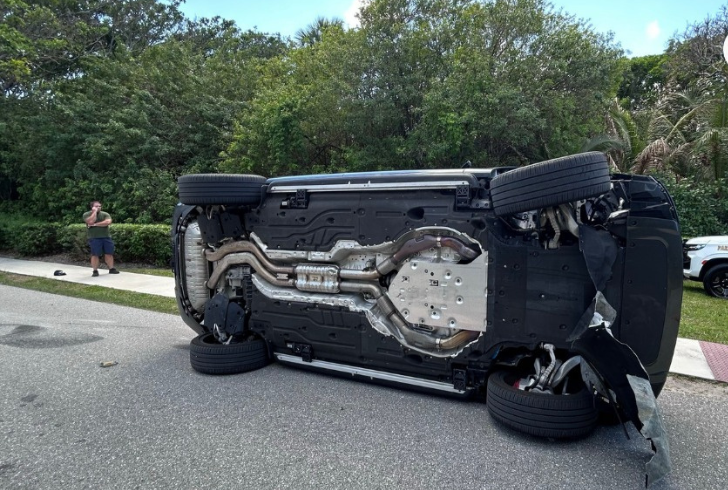
Instagram | indiatoday |Florida police arrested Tiger Woods for a suspected DUI following a rollover crash involving a trailer.
The latest incident unfolded on March 27 in Jupiter Island, Florida. According to the Martin County Sheriff’s Office, Woods’ Land Rover struck a trailer from behind in a residential neighborhood. The impact caused the vehicle to roll onto its side.
Law enforcement officers arrested Woods on suspicion of driving while impaired. A drug-recognition expert evaluated him at the scene and determined impairment was present. Woods pleaded not guilty to the charge and later released a statement saying he would step away from public life to seek treatment and focus on his health.
Officials confirmed that neither Woods nor the other driver involved in the two-vehicle crash suffered injuries.
This investigation differed significantly from the 2021 crash in Los Angeles County. Officers in Florida immediately involved a drug-recognition expert—commonly referred to as a DRE—to evaluate Woods’ condition.
That step never occurred in the 2021 case.
What Happened During the 2021 Crash
The earlier crash took place in February 2021 while Woods was driving a Genesis SUV through Los Angeles County. The collision caused severe injuries, including broken bones in his right leg.
According to the official investigation, Woods’ SUV struck a median sign, crossed into opposing lanes of traffic, left the roadway, hit a tree, and rolled over. The vehicle’s path covered roughly 400 feet before coming to rest.
Despite the severity of the accident, the Los Angeles County Sheriff’s Department concluded that impairment was not a factor. Officials attributed the crash to unsafe speed and the driver’s inability to negotiate a curve in the road.
Investigators estimated Woods was traveling between 84 and 87 miles per hour when the crash sequence began.
Data recovered from the SUV’s event recorder indicated something unexpected. Instead of braking before impact, the vehicle showed signs of acceleration.
Captain Jim Powers addressed the finding during a press conference and acknowledged uncertainty about whether Woods attempted to avoid the collision. His response at the time was direct: “We don’t know that.”
Experts Question the Investigation
The handling of the 2021 crash drew criticism from several specialists in accident reconstruction and law enforcement procedures.
Among them was Jonathan Cherney, a former police detective in Southern California who now works as a crash reconstruction and police practices expert. After reviewing the scene, Cherney suggested the investigation may have missed key indicators.
“It’s pretty obvious to me it was overlooked in 2021,” Cherney said. He also suggested that celebrity status could have influenced the decision-making process. According to Cherney, investigators may have taken a relaxed stance because the crash did not harm another person.
He described the mindset as potentially believing Woods “didn’t really hurt anybody else except himself, so why bother doing anything?”
Cherney argued that this approach removed an important deterrent. “Nobody gave him any incentive to not do it again,” he said.
Evidence at the Scene Raised Concerns
Several aspects of the crash puzzled accident analysts who later reviewed the case.
Investigators documented that Woods’ vehicle failed to follow the curve of the road. Instead, it traveled in a mostly straight path before striking the median. After hitting a large wooden sign, the SUV continued across opposing traffic lanes and eventually rolled over after striking a tree.
No evidence suggested braking during this sequence. Data also showed no attempt to steer away from the developing emergency.
The absence of evasive action raised a fundamental question often considered in crash reconstruction: would a fully alert driver fail to react under those circumstances?
Additional details deepened the uncertainty surrounding the case.
Shortly after the crash, Woods reportedly appeared confused about his location. According to records from the investigation, he believed he was in Florida rather than California.
Authorities also found a pharmaceutical bottle inside a backpack at the crash site. The container lacked a label.
Despite these factors, investigators did not request a warrant to test Woods’ blood for the presence of drugs or medications.
A Different Approach in the 2026 Investigation
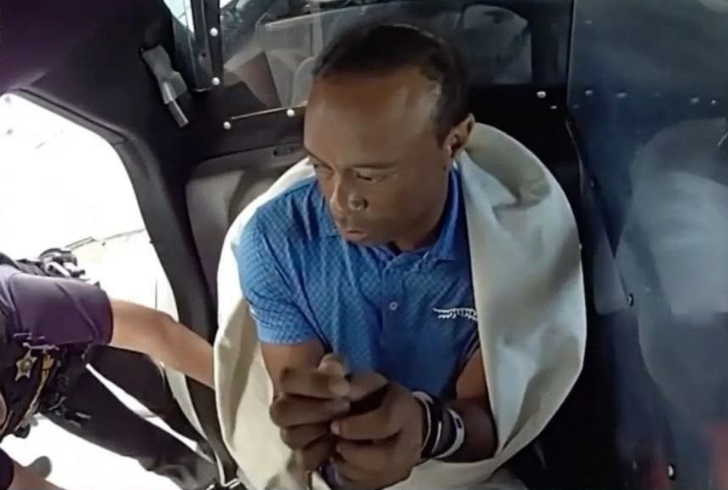
Instagram | hidden.ny | Florida police arrested Woods for impairment following an immediate evaluation by a drug-recognition expert.
Law enforcement in Florida followed a far more direct investigative path after the 2026 crash.
Officers brought in a drug-recognition expert to assess Woods’ condition immediately. That evaluation concluded impairment was present, which led to the arrest.
Cherney later told USA TODAY Sports that the Florida response reflected stronger investigative procedure.
“Florida law enforcement handled it much better,” he said. “They probably saw what happened with the sheriff’s department in L.A. and thought, ‘We need to get this right.’”
The use of a DRE is common when officers suspect impairment but need specialized evaluation beyond standard field sobriety tests.
Sheriff’s Department Responds to Scrutiny
Following the recent arrest in Florida, reporters asked the Los Angeles County Sheriff’s Department whether the agency had reconsidered its conclusions from the 2021 investigation.
The department declined to speculate.
“We will not engage in conjecture about an incident that occurred five years ago, regardless of the individual involved,” officials stated in a response provided to USA TODAY Sports on April 2.
The agency referred questions back to the original press conference held after the crash.
At that event, then-Sheriff Alex Villanueva emphasized speed as the primary cause of the accident. Villanueva stated that the SUV’s event recorder indicated Woods accelerated before impact.
Villanueva later lost his reelection bid in 2022. He is currently campaigning to return to the office in the upcoming election.
A Pattern in Woods’ Driving History
The Florida arrest also highlights a broader pattern connected to Woods’ driving incidents over the years.
Since 2009, the golfer has been involved in four widely reported driving events tied to recklessness or impairment.
One of the earliest occurred outside Woods’ Florida home in 2009. He was behind the wheel when his Cadillac Escalade struck hedges, a fire hydrant, and a tree near his driveway. A neighbor reportedly observed him snoring at the scene. Police issued a ticket for careless driving, which carries a $164 fine and four points on a Florida driving record.
Another major incident occurred in 2017 when officers found Woods asleep behind the wheel of a parked vehicle with the engine running in Jupiter, Florida. He appeared disoriented and reportedly believed he had been driving from Los Angeles.
Authorities later charged him with driving under the influence after toxicology tests revealed five substances in his system. Those substances included the sleep medication Ambien and the painkiller Vicodin.
Woods has publicly acknowledged dealing with chronic pain and a sleep disorder. Both conditions can complicate medication use and driving safety.
Could the Outcome Have Been Different?
Some legal experts believe a stronger response in 2021 might have altered the trajectory of later events.
Doug Burnetti, a transportation injury lawyer based in Florida, explained that a DUI charge at that time could have carried lasting consequences.
“If back in 2021 they had found that Tiger Woods was under the influence of drugs at the time of that incident, and he was charged and convicted, it may have had an effect on him psychologically,” Burnetti said.
He suggested that a conviction could have encouraged Woods to reconsider driving while managing pain with medication.
California law also includes mandatory penalties for DUI convictions. Those penalties may include:
• A 90-day DUI education program
• Suspension of a driver’s license
• A period of probation
Such measures aim to discourage repeat offenses while protecting both drivers and the public.
Signals Behind Repeated Incidents

Instagram | richardtaiteofficial | While the cause is uncertain, Taite links Tiger's driving incidents to complex personal factors like pain management.
Patterns often carry meaning in accident investigations. Repeated incidents involving similar circumstances tend to attract attention from experts and treatment professionals.
Richard Taite, founder of Carrara Treatment in Los Angeles, commented on the broader pattern surrounding Woods’ driving problems.
“Tiger didn’t just lose his swing after 2009,” Taite said. “He lost control of something in his life.”
Taite emphasized that the exact cause remains uncertain. Pain management, prescription medications, or other personal factors could all play a role. Without direct evidence, speculation remains limited.
Still, Taite noted that repeated incidents rarely occur by coincidence.
“When the same types of incidents keep happening, that’s not bad luck,” he said. “That’s a signal.”
Why the 2021 Case Still Matters
The crash in Los Angeles remains unique among Woods’ driving incidents. It stands as the only major accident in which authorities issued no ticket and pursued no impairment investigation.
Ironically, many experts consider it the most dangerous of the four incidents.
The SUV crossed into opposing traffic lanes at high speed. A collision with oncoming vehicles could have produced far more severe consequences. That scenario never occurred, but analysts say the near-miss still carries lessons about investigative decisions, accountability, and public safety.
The renewed focus on Tiger Woods’ 2021 crash reflects more than curiosity about a celebrity athlete. It highlights how investigative choices can shape future outcomes.
The Florida arrest in 2026 showed a far stricter response, including the immediate involvement of a drug-recognition expert and an impairment charge. That contrast has fueled ongoing debate about whether the Los Angeles investigation should have followed a similar path.
Crash reconstruction specialists, legal analysts, and law enforcement observers continue to examine the evidence left behind at the 2021 scene. The unanswered questions from that event remain part of a larger discussion about accountability, public safety, and how high-profile cases are handled.
For many experts, the issue is not just about a single crash. It is about recognizing warning signs early—and ensuring they lead to action before another accident occurs.